

Dealers are navigating tighter technician availability, rising customer expectations, expanding technology demands and increasing operational strain, all while needing to diversify and stabilize revenue. In this environment, fixed operations stand out as one of the dealership’s most dependable growth engines, yet many teams struggle to turn that potential into consistent results. The challenge is not a lack of strategy, but execution, as operational discipline and alignment around the guest experience ultimately determine performance.

Why the Guest Experience Drives Fixed Ops Performance
Fixed operations drives dealership profitability by creating recurring revenue, improving customer retention and strengthening long-term business stability. As market conditions become more unpredictable, dealerships increasingly rely on service operations to sustain growth and customer loyalty.
Despite this shift, not everyone is convinced. Some dealers remain skeptical about the long-term upside of fixed operations, pointing to rising cost pressures and the belief that repair and maintenance work will continue to migrate to independent shops. With everyday expenses climbing and household budgets under strain, many customers are delaying major repairs altogether.
That skepticism is understandable. But it often reflects short-term strain rather than long-term potential. The difference between dealerships that struggle and those that remain resilient is not market conditions. It is execution.
Many dealerships still lack a consistent service process, especially in the in‑between moments from check‑in to final delivery. Weak execution shows up as fragmented communication between advisors, technicians and customers, unclear handoffs and a disjointed service experience.
These breakdowns cost the business:
- Reduce technician throughput
- Limit service revenue opportunities
- Create unnecessary delays
- Weaken customer trust
- Increase operational friction
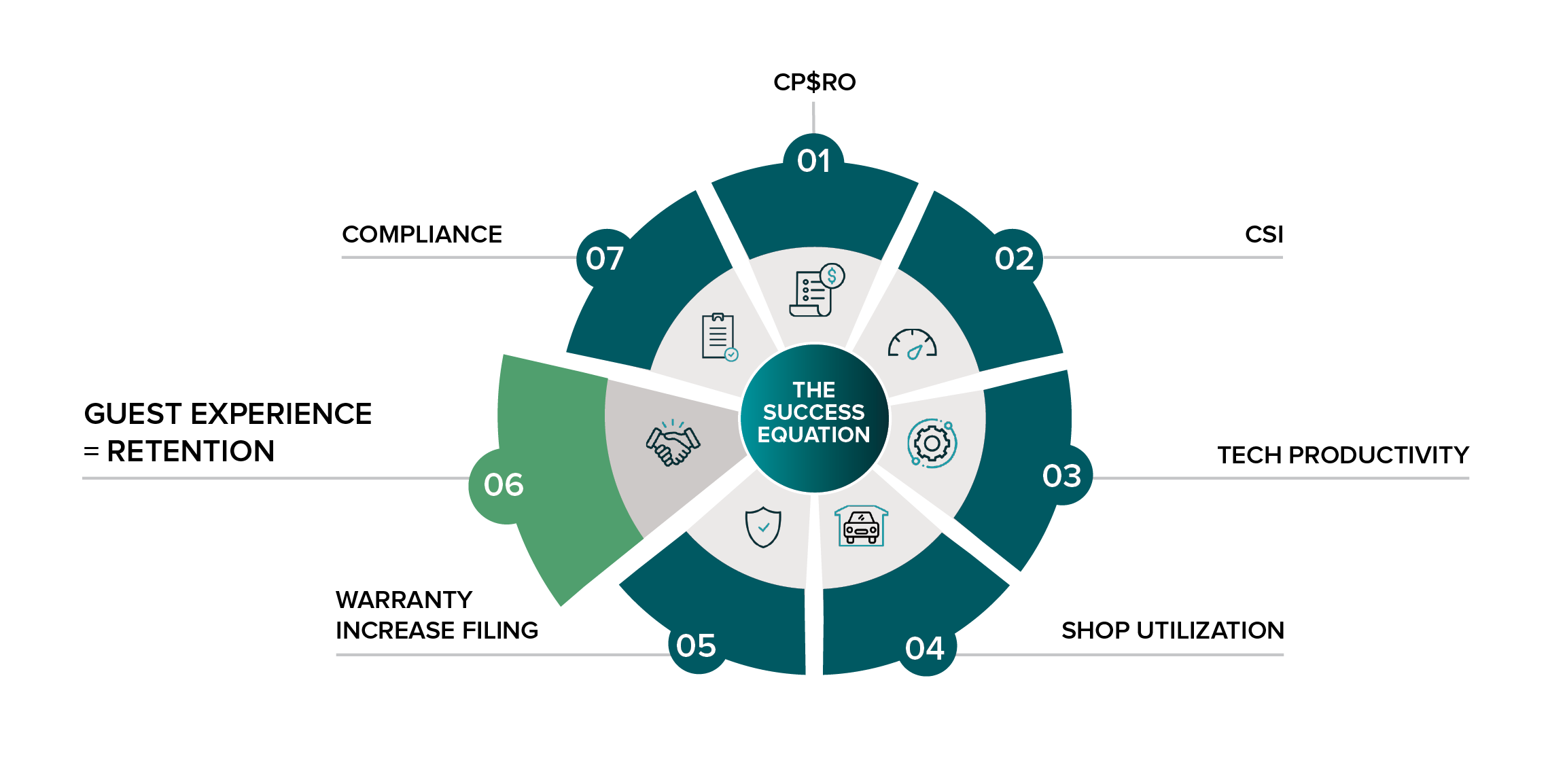
High‑performing dealerships do not focus solely on surface‑level ROI. They evaluate fixed ops holistically, knowing that disciplined processes and connected teams are what turn service demand into sustainable growth.
How Service Technology Improves Efficiency and Customer Trust
Dealerships today are well positioned with service technology, but the greatest opportunity for fixed ops performance lies in consistent adoption and execution. Many stores already use digital tools integrated into the DMS, and when those tools are embedded into a repeatable service process, they improve service lane efficiency, team alignment and the overall customer experience. Technology delivers the most value when it supports daily fixed ops workflows rather than operating in isolation.
Service video illustrates this opportunity clearly. When used consistently, video inspections build trust, improve communication and help advisors explain recommendations more effectively. Appointment scheduling tools provide similar benefits when applied with discipline. Accurate scheduling aligned with shop capacity supports smoother days, balanced technician workloads and stronger throughput. Service lane data becomes even more impactful when it is used consistently to guide advisor conversations and improve cross‑department collaboration.
When service technology adoption is reinforced by disciplined processes, dealerships see gains well beyond convenience. Fixed ops teams improve technician productivity, increase throughput, capture more service revenue and strengthen customer retention. The highest‑performing dealerships focus less on adding new tools and more on maximizing the technology they already have through connected, end‑to‑end execution.
The Processes That Improve Service Lane Efficiency
Fixed ops performance improves when dealerships focus on a few core operational levers that drive consistent execution. Scheduling discipline is foundational. Accurate booking aligned to true shop capacity improves service lane efficiency, balances technician workloads and increases throughput. When scheduling is treated as an operational control, rather than an administrative task, dealerships gain predictability across the service lane and reduce daily friction.
Clear communication and process consistency reinforce those gains. Consistent use of service video, proactive customer updates and standardized multi‑point inspections improve transparency, trust and approval rates. Defined workflows and reliable handoffs reduce variability and support stronger technician productivity. When these operational levers work together, technology becomes a performance multiplier, helping dealerships turn fixed ops execution into sustainable service growth and better customer retention.
How Fixed Operations Drives Customer Retention and Profit Stability
Retention remains one of the most valuable wins. Prepaid maintenance programs provide a clear path for repeat visits, shaping customer behavior without heavy-handed selling. The goal is not to push sales at delivery but to ensure customers have a reason to return.
Profit stability grows when dealers stop viewing service as the place that pays the bills and start seeing it as an engagement funnel.
Experience has taught us that customers are more likely to keep doing business with you if they have a positive experience in the service drive.
Engagement is not a side benefit; it is the gateway to lifetime value.
Fixed operations is no longer a support function. It is the most reliable driver of trust, loyalty and long-term profitability in the dealership. The dealers who succeed commit to disciplined processes, clear communication and a seamless experience from check-in to delivery.
When execution stays centered on the guest, fixed ops becomes more than a revenue stream. It becomes the foundation that stabilizes the business and fuels growth, regardless of market conditions.

×
![]()
 1 min read
 Case Study