


We review data from 1,700+ dealerships nationwide to create a report that outlines top trends in metrics like F&I product penetrations, PVR, deal mix and more. Discover the statistics that are impacting dealers below, then compare the data with your own to help plan for your dealership's success.
Despite car sales being down year over year and rising global uncertainty, the automotive industry entered 2026 on relatively strong footing. First‑quarter performance shows dealers adapting quickly while maintaining positive momentum and consumer purchasing continuing despite affordability concerns lingering. The following metrics provide insight into where performance is holding firm and where opportunity lies in the next quarter.

Key Automotive Trends in Q1 2026
- F&I PVR Up Year Over Year
- Front-end Gross Increases with Spring Selling Season
- Product Proves Value Amidst Affordability Issue
Dealership Performance and Profitability Trends
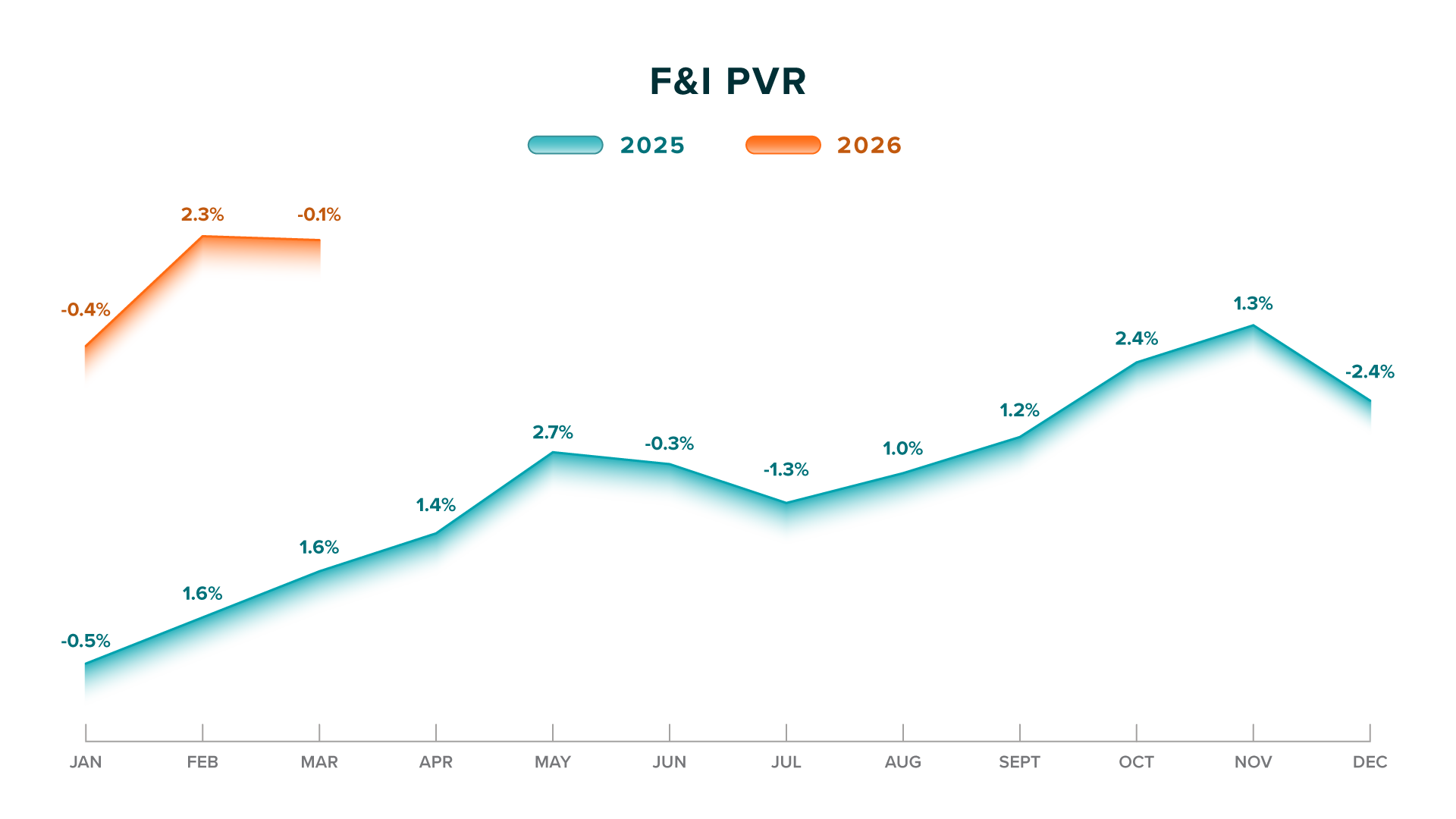
F&I PVR Up YOY
Despite a slight dip from December 2025 to January 2026, F&I PVR picked up in February and March. Overall, the first quarter remained well ahead compared to Q1 2025.
Front PVR Increases With Spring Selling Season
Although significantly lower YOY, front-end gross is trending up in Q1 2026, improving after a decline that began in May 2025 and lasted to the end of the year.

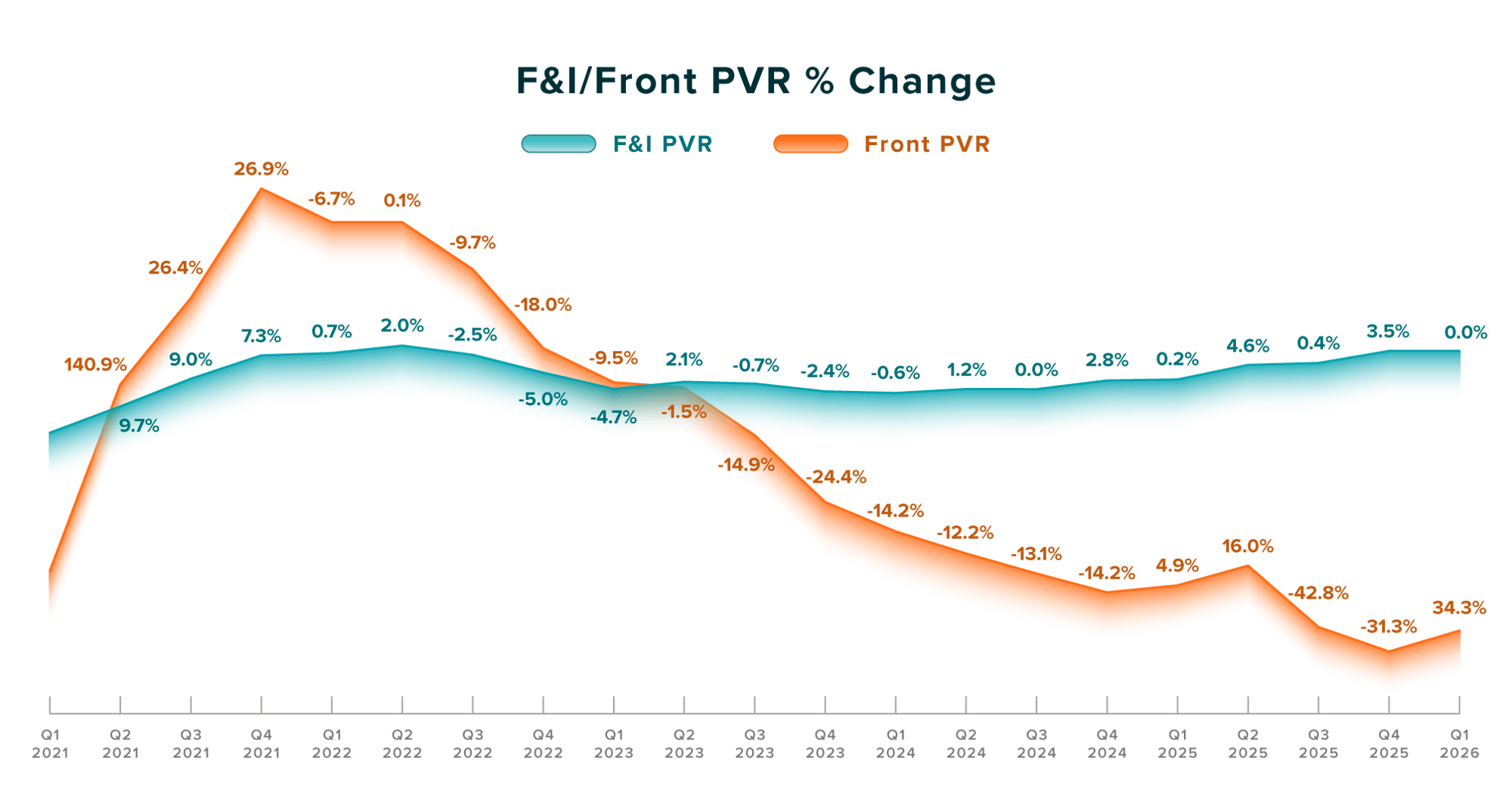
Front PVR Improves Quarter to Quarter, While F&I PVR Remains Stable
Since 2022, we've seen a mostly downward trend in Front PVR, and although YOY Front PVR is still down, Q1 2026 showed a sizeable increase over Q4 2025.
Our Take: Kicking off the year with rising front‑end PVR throughout Q1 is a more than welcome shift. In fact, this marks the first time since 2021 that we’ve seen three consecutive month‑to‑month increases in front‑end PVR. While this momentum is encouraging, expectations should remain grounded as we do not anticipate significant Front PVR expansion over the balance of the year.
As mentioned in our last report: As front‑end margins continue to face pressure, the strength and stability of F&I performance remain critical to overall dealership profitability. In a market shaped by ongoing affordability constraints and evolving buyer behavior, F&I continues to serve as a key lever, helping to offset tighter vehicle margins while supporting a customer‑focused sales experience. Delivering a consistent, high‑quality F&I process to every customer is more important than ever, and leading dealers are continuing to find efficiencies in how and where they engage customers.
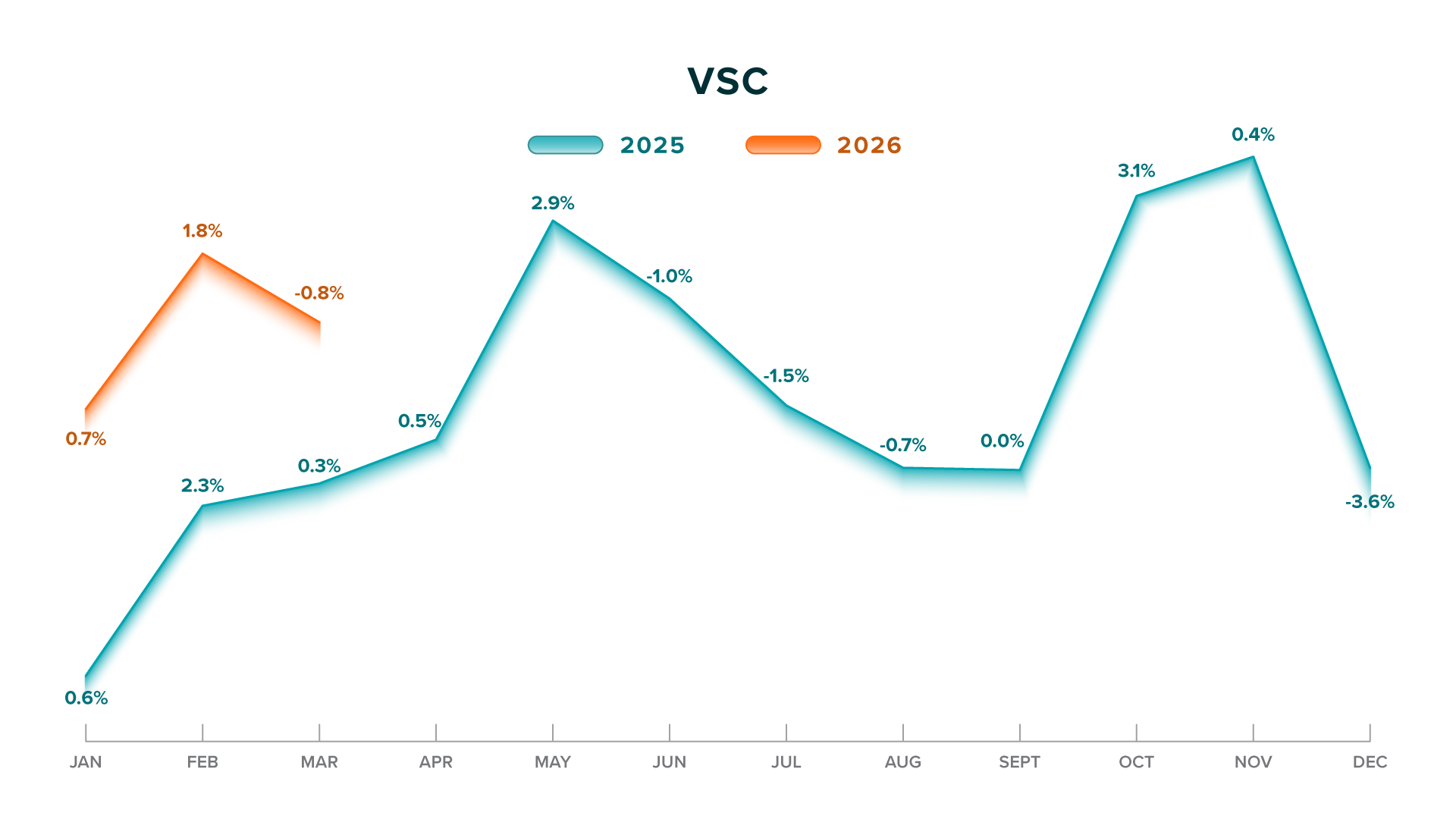
Vehicle Service Contract Penetration Increased YOY
Though tracking lower than October and November 2025, vehicle service contract penetration remained ahead Q1 YOY.
Our Take: With affordability continuing to challenge vehicle buyers, vehicle service contracts remain a key tool for managing rising ownership costs. Strong penetration highlights growing consumer demand for cost predictability and protection, particularly in the used‑vehicle market. For dealers, consistent VSC performance supports customer satisfaction, loyalty and profitability amid ongoing market uncertainty.
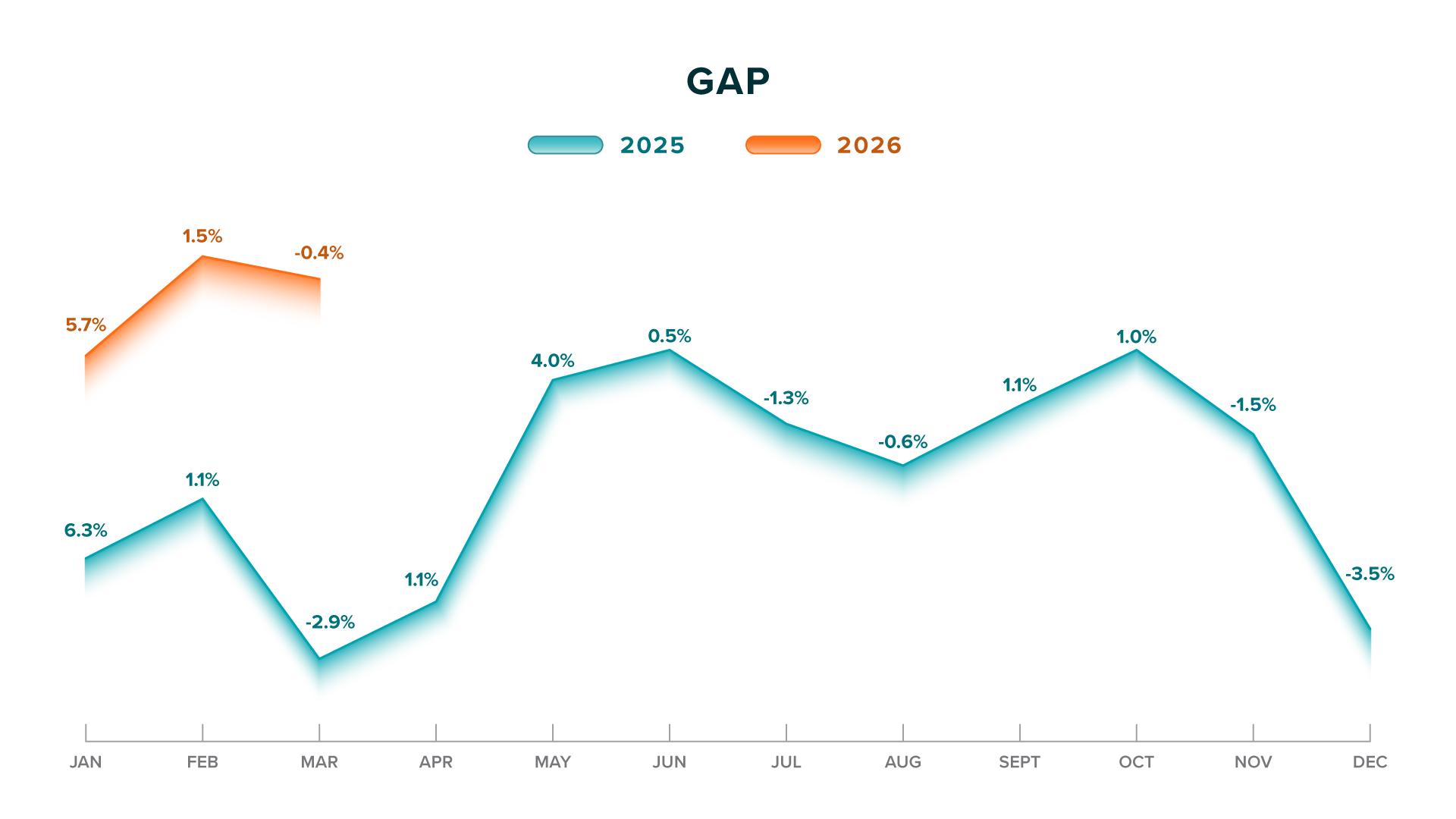
GAP and Products Per Deal See a Q1 Boost in Performance
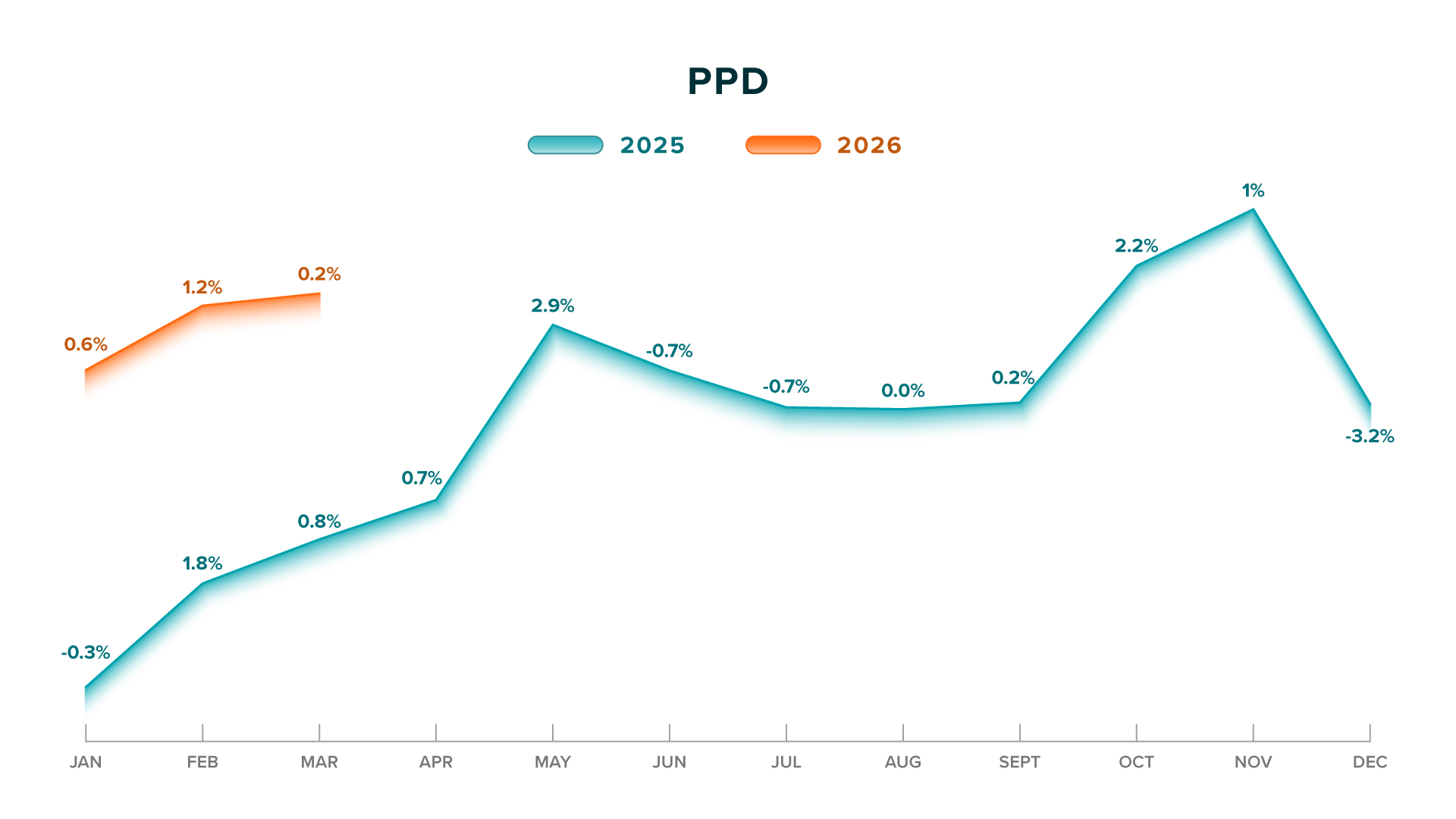
As VSC trend levels followed, so did GAP and PPD. Dealers saw overall product and GAP penetration improve from a December dip across both sectors. Q1 ended ahead YOY for both PPD and GAP, with GAP penetration throughout the quarter performing slightly higher than all of 2025.
Our Take: Today's consumers, facing affordability pressures, are searching for lower monthly payments and extending financing terms to 84-months is becoming more common. With longer retail installment contracts comes greater exposure, meaning GAP becomes increasingly important. Ensure your business managers are equipped to meet evolving customer needs, serving as consultants and being transparent with the pros and cons of their desired term length. Even as budgets are strained, educated consumers see value in the products.
Economic Factors Shaping Vehicle Sales
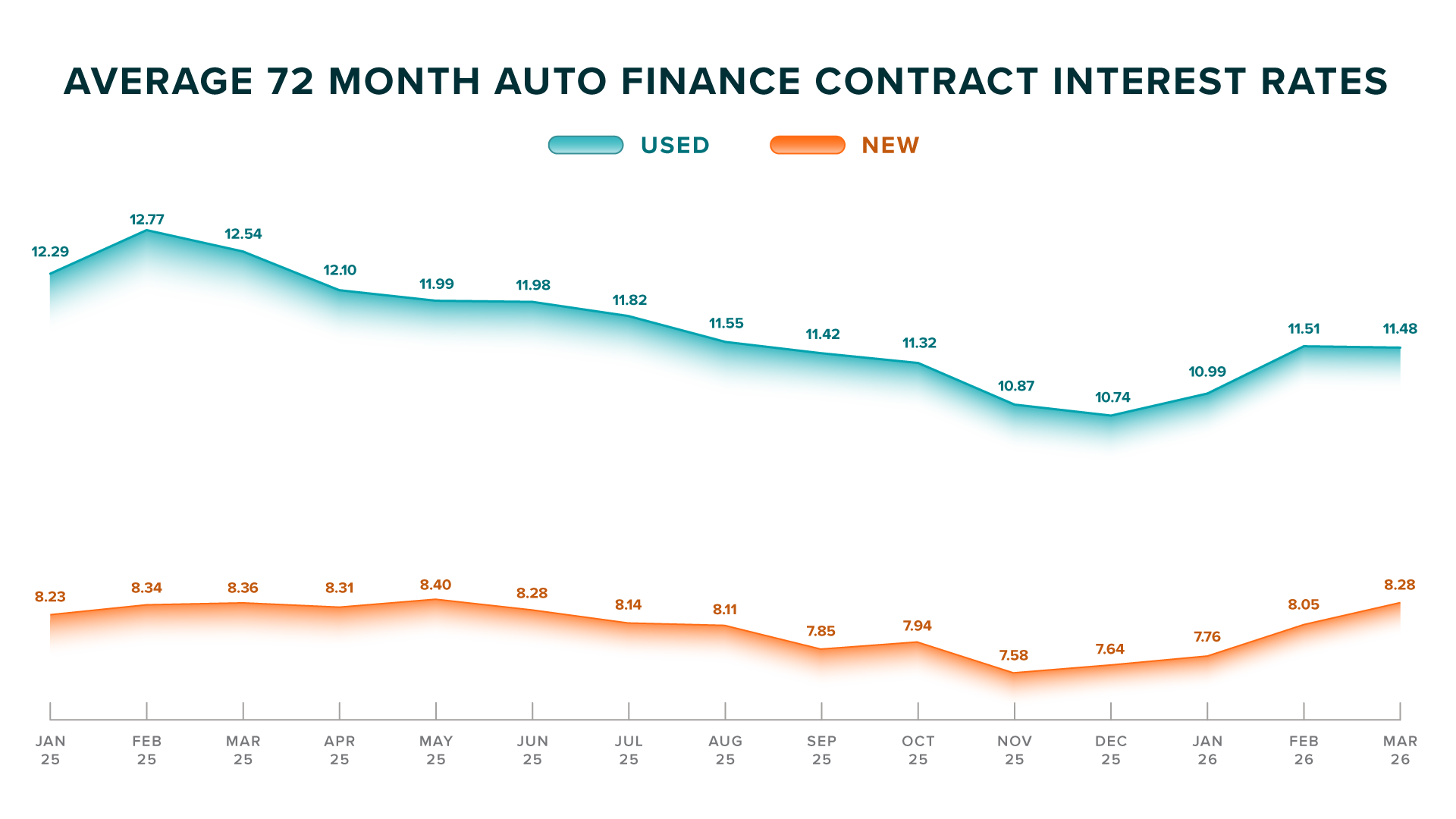
More Fluctuation in Used Car Interest Rates Than New
Interest levels are a bit lower in Q1 than we saw this time last year, though they are rising since the end of Q4 2025. There has been more fluctuation in used vehicle interest rates than in new vehicles. However, new interest rates saw a 7.76 to 8.28 level climb in the first three months of the year.
Our Take: With The Fed unlikely to decrease interest rates soon, interest rate sensitivity is likely to continue into the next quarter. Dealership teams who take the time to understand their consumers' unique needs and situations can serve as empathetic and knowledgeable guides helping to match customers with the right vehicle, terms and product.

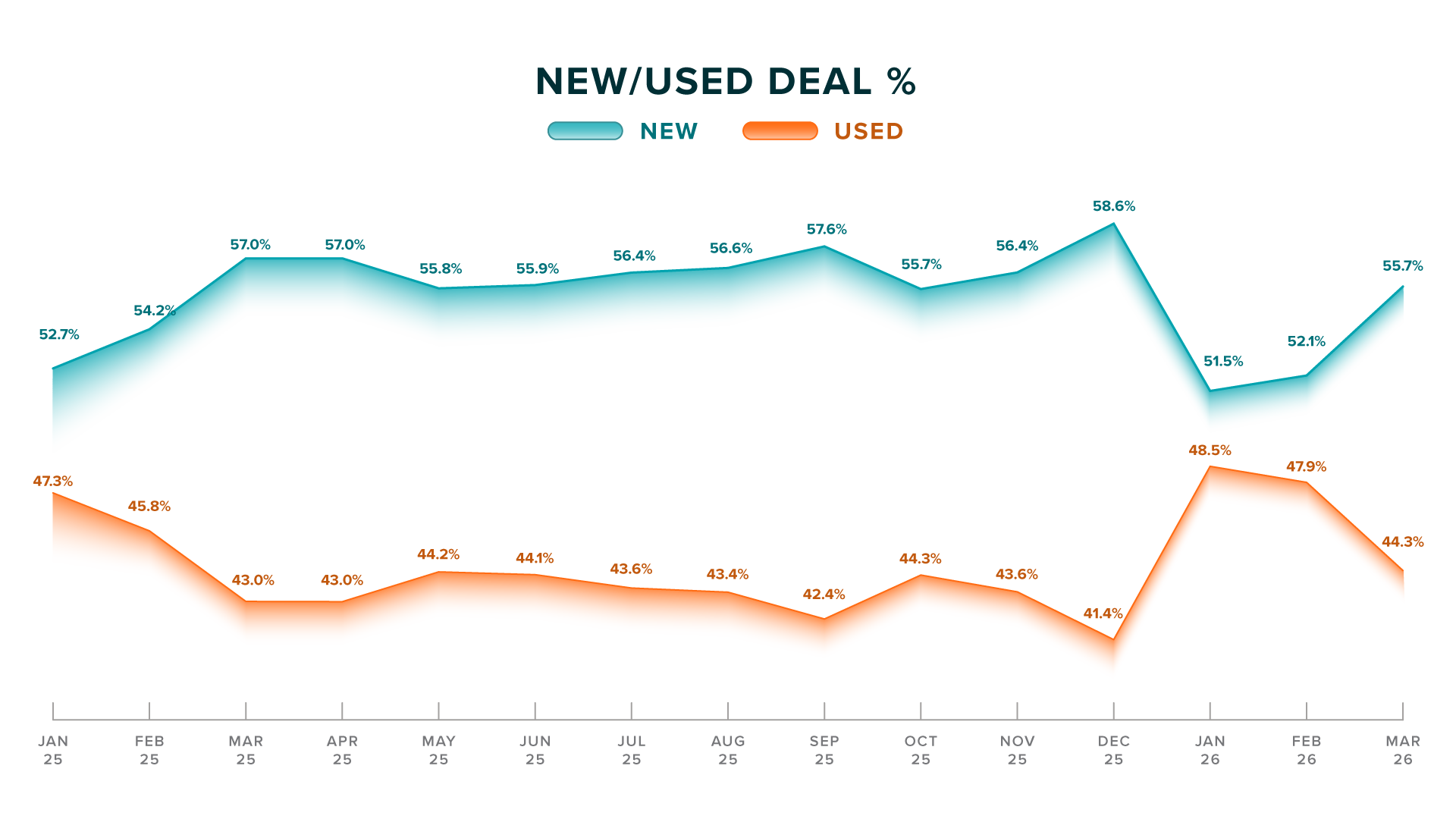
New Vehicle Sales Begin to Increase in Q1
The gap between new and used vehicle sales widened in March as new vehicles captured a larger share of total sales.
Our Take: Spring selling season is in full swing and with potentially higher tax returns for many consumers, we expect new car sales to remain strong. However, pre-tariff demand last year helped dealers pull-ahead, meaning this year’s spring volume pales in comparison. We also anticipate more late-model vehicles entering the market throughout the year as we start to reap the benefits of increasing lease penetration over the past few years following a post-pandemic decline. These off-lease vehicles will be there to meet the needs of consumers searching for reliable and affordable options.
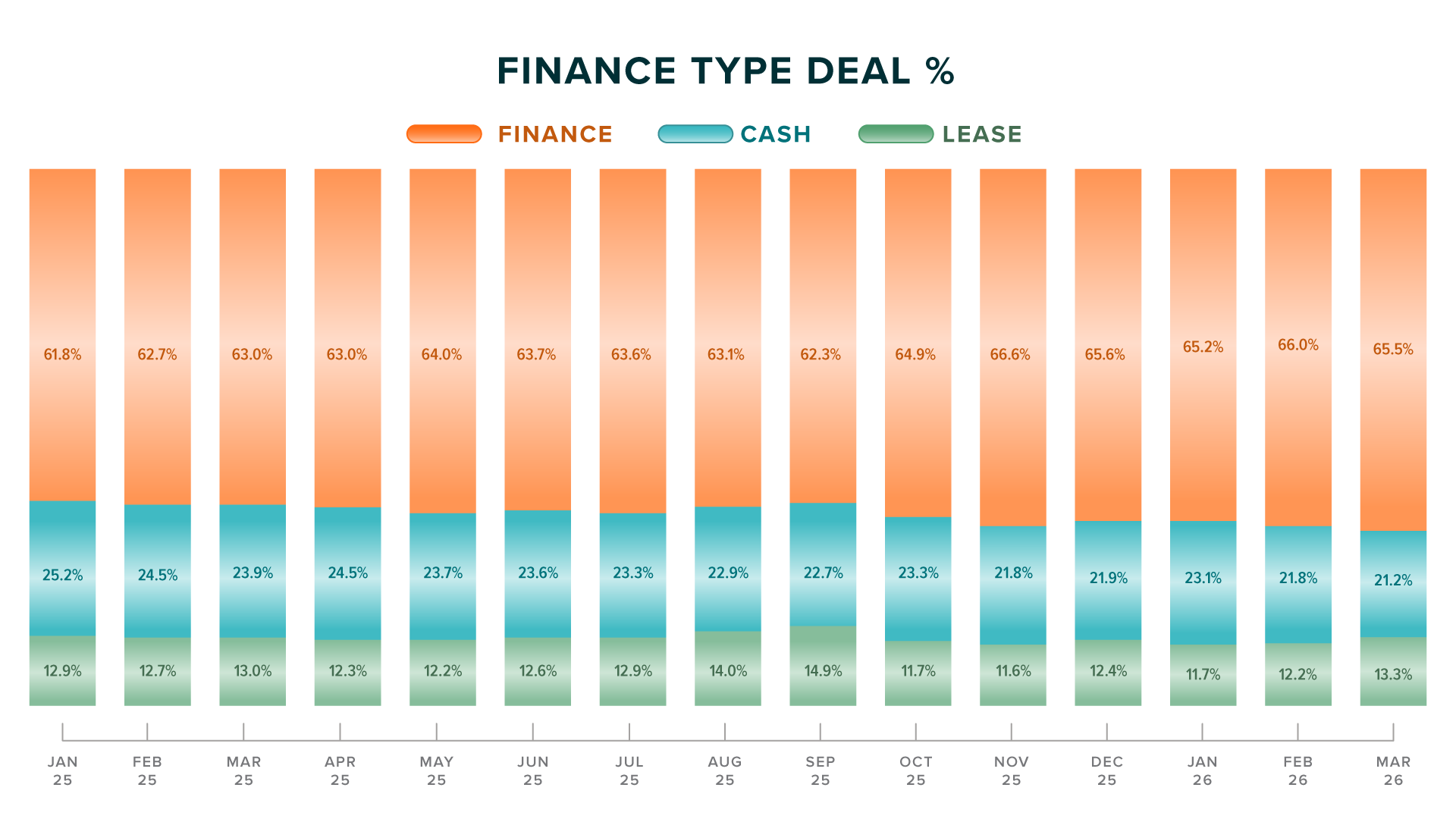
Finance Deals Increase YOY and Lease Deals Increase Month-to-Month in Q1
Consumers were leasing vehicles more month-to-month throughout Q1, causing a drop in cash deals but only a slight change in finance. However, finance deals saw a significant jump from Q1 2025 YOY.
Our Take: Lenders overall offering longer financing terms plus appealing manufacturer incentivized rates could be helping to increase finance penetration. Competitive lease programs provide a viable alternative for consumers who enter the showroom intending to buy new but find the purchase exceeds their budget.
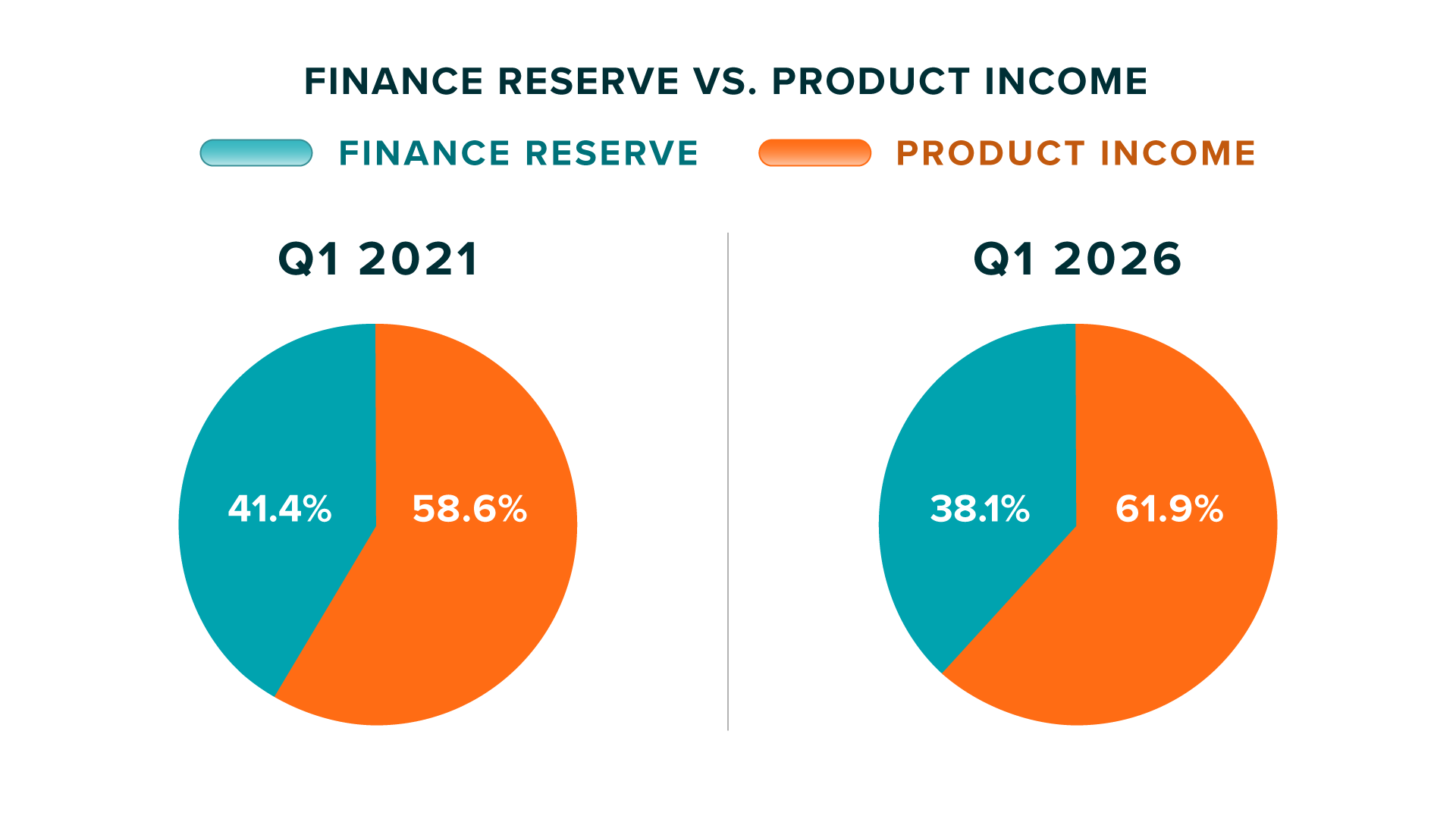
Product Income Sees Growth Since Q1 2021
Sometimes taking a wider step back can help us see the metrics more clearly. Although we've seen some fluctuation in the product to reserve income ratio, product income has ultimately grown over the past five years.
Our Take: Product sales create meaningful, long‑term value for both the customer and the dealership. As vehicle repair and maintenance costs continue to inflate, the products customers purchase increasingly demonstrate their value over time, supporting a stronger ownership experience and deeper customer loyalty.
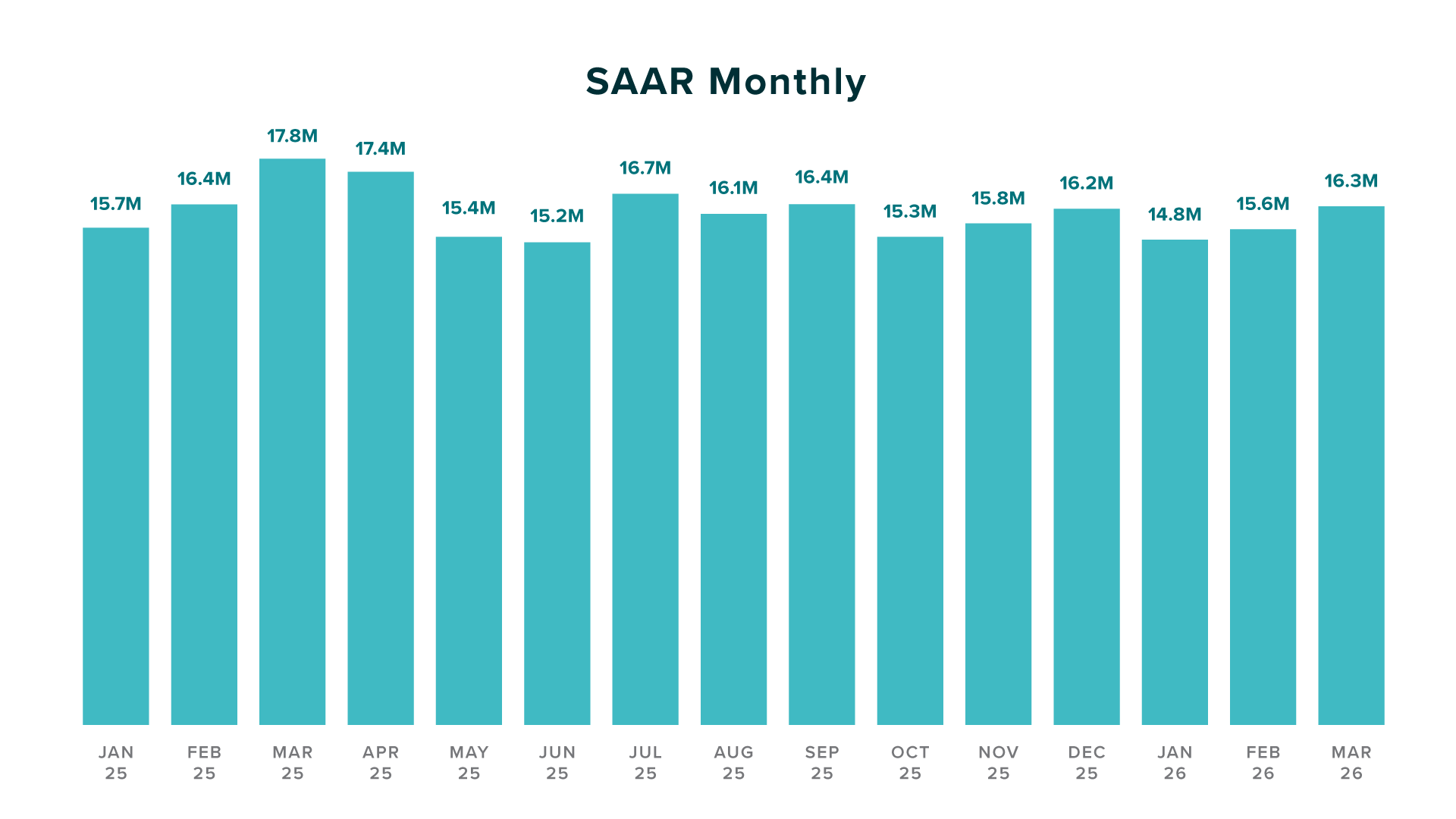
SAAR Reaches Quarter-High in March
The SAAR, which has been low since January, reached its highest this year in March at 16.3 million units. This is a significant drop since the SAAR reached 17.8M units in March 2025 and 17.4M in April 2025, which was increased due to rising demand in purchasing before the industry tariffs began.
Our Take: Large areas of the country experienced winter weather storms early this year that hampered daily life and therefore vehicle purchasing. However, as previously mentioned, a seasonal uptick in vehicle sales is common during tax season when some consumers receive extra money in the bank. The IRS reported an average refund amount of $3,521 in the week ending March 27 versus $3,170 in 2025. YOY, we saw lower sales overall in comparison to Q1 2025 pre-tariff demand boost.
Top Trending News
Lasting Impacts from the War in Iran
The war in Iran (at time of writing in mid-April), will have lasting effects on the automotive industry and economy. The immediate impacts that consumers are facing revolve around higher gas prices and goods. As consumers navigate expensive gas prices, some believe that electric vehicles will reemerge to the forefront as a viable alternative. While the duration of the conflict remains uncertain, ripple effects will continue to impact affordability and in some cases, consumer preferences.
Affordability Issues Stem From Multiple Factors
Consumers are facing multiple challenges when it comes to their auto purchasing power, from increased vehicle pricing to higher repair, maintenance, insurance and gas costs. Monthly payments hit all-time highs in Q1 too - Edmunds reports $773 as the average monthly payment consumers agreed to for their financed new-vehicle purchases. And what about those 84-month or longer financing terms we mentioned earlier? They made up 22.9% of financed new-car purchases this quarter. Operational alignment between departments and teams at your dealership is more important than ever. A well-functioning team will be better positioned to meet consumers facing very real budgetary constraints.
Dealers Are Taking a More Deliberate Approach to EVs
Dealers are evaluating how EVs fit within their specific market, customer base and profitability model rather than viewing them as an all-or-nothing shift
With a wave of off-lease EVs expected to return to the market, potential opportunities may emerge across:
- The used car department
- The service drive
- The F&I office through aligned protection products and service contracts
This more balanced perspective allows dealers to stay responsive to consumer demand while managing inventory mix and profitability with greater precision. With fuel cost concerns top-of-mind, consumers may look to hybrid or electric models. Ensure your team is ready to serve as subject matter experts on both powertrains and help consumers with the decision-making process. Offering protection products tailored to electric vehicles can also be the differentiator your consumers need to move forward with choosing this powertrain.
Preparing For Dealership Success This Year
Market conditions will continue to evolve, but the first quarter of 2026 reinforces an important truth: long‑term success is built by focusing on what you can control and acting with purpose. Dealerships that focus on prioritizing the customer experience by providing expert insight and consultative education create stronger outcomes for both consumers and the business.
As teams step into the role of trusted advisors, they help customers make informed decisions while building loyalty that extends well beyond a single sale. Momentum does not happen by chance; it is driven by disciplined action and a commitment to serving customers well. Backed by the insights above and a trusted performance partner, dealerships are positioned to make 2026 a standout year.

Projections involve assumptions and uncertainties and are not guarantees of future results actual outcomes may differ materially. The content is provided for informational purposes only, does not constitute legal, financial, or compliance advice, and should not be relied upon without independent professional review.
×
![]()
.png?width=450&name=JM%26A%20-%20Driving%20Forward%20Blog%20Graphics%20-%2020260504Index%20Thumbnail%20(700x486).png)
 < 1 min read

.png?width=450&name=JM%26A_Healt-Captive-Blog-Image_OG-index-image-v2%20(1).png)